Ball Peen
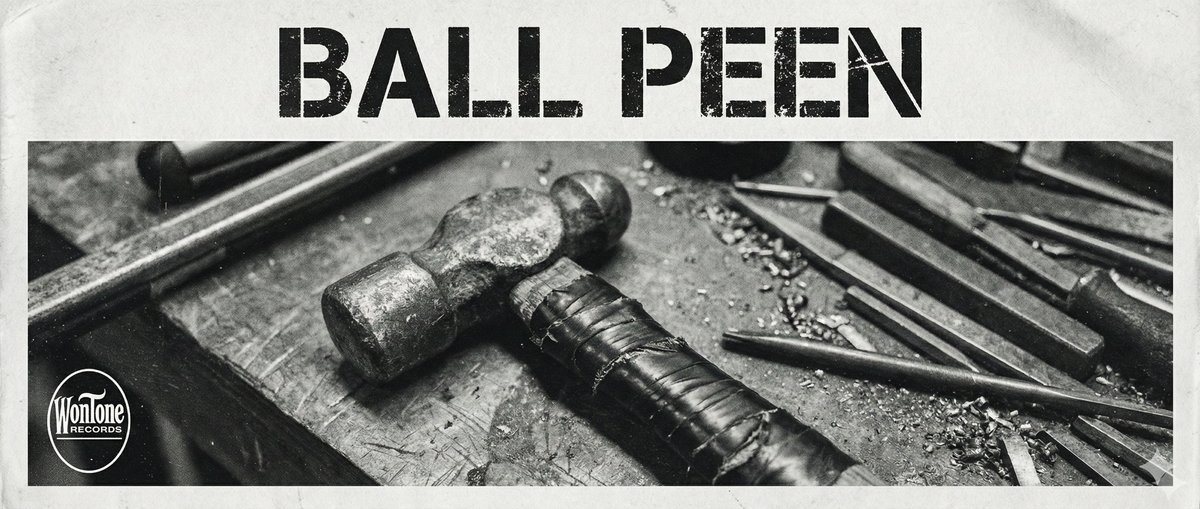
The liner notes that follow originally accompanied the 1970 single release of “Ball Peen.” Written at the time of recording, they reflect the period’s prevailing habit of saying just enough—and no more—about a song’s meaning, leaving interpretation to the listener and rumor to do the rest.
For decades, these notes circulated only in fragments: quoted in trade magazines, referenced in interviews, or half-remembered by collectors who claimed to have owned an original pressing. The original text has not been formally reprinted since its initial release, and for many years it was assumed to be lost entirely.
Presented here for the first time since 1970, the liner notes are reproduced as they originally appeared, without revision or clarification. They are included not to settle debates about the song’s meaning, but to preserve the way it was framed at the moment it entered the world—ambiguous, suggestive, and deliberately unresolved.
What follows is the record as it was left.
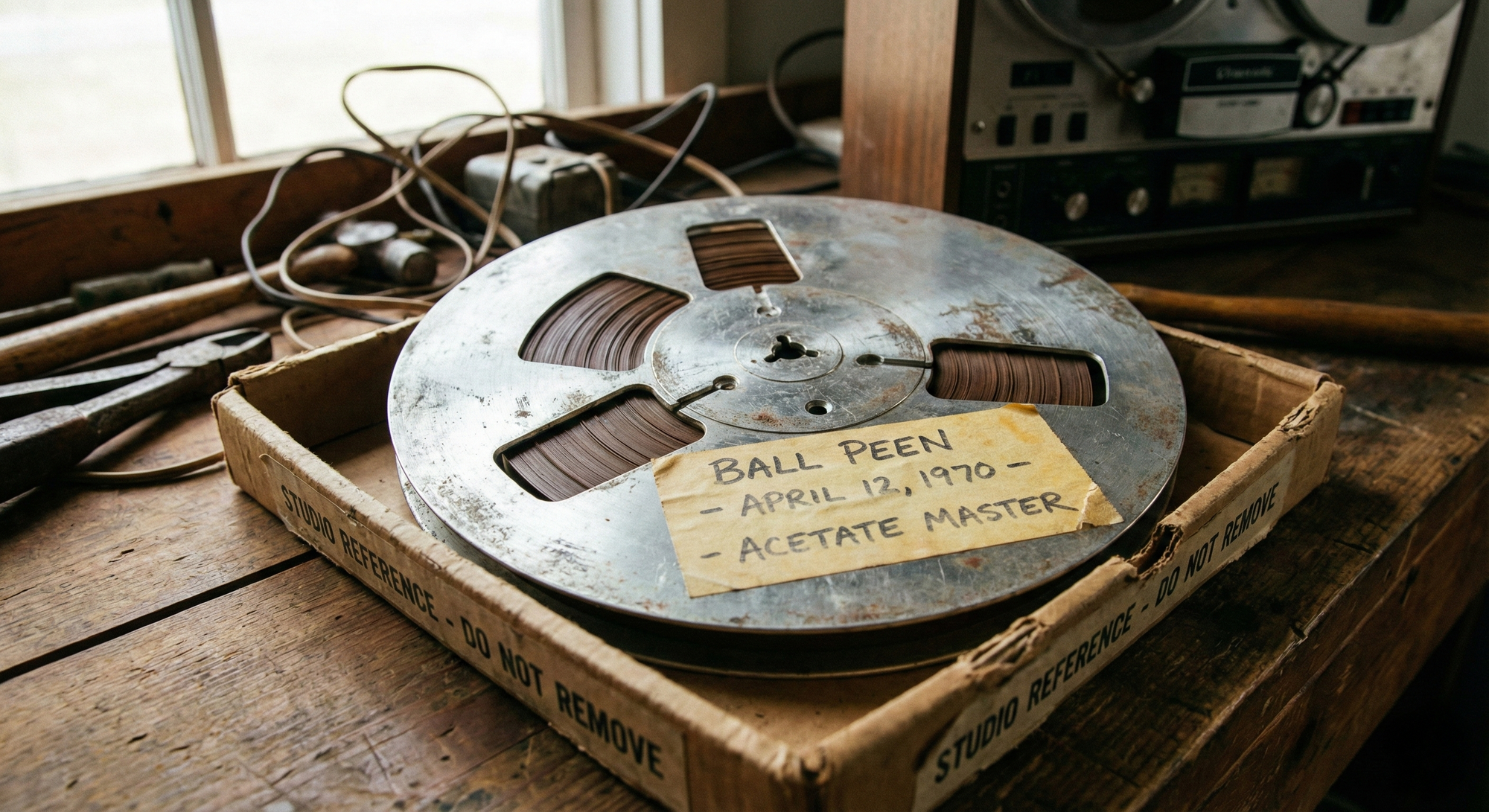
Ostensibly, “Ball Peen” is a song about work. A veteran hand slows a rookie down, passes along the rules, and repeats the advice the way it was once repeated to him. There’s a mentor behind the mentor—Tony—whose name carries the weight of experience, the kind that doesn’t come from manuals or training sessions. Timing is everything. Not speed. Not force. Just knowing when.
That surface reading is deliberate. The setting is ordinary, almost dull: smoke, cheap lights, a drink poured strong enough to steady the hands. The language is practical, stripped of ornament. You don’t ask names. You don’t ask how it ends. You do the job right, and then you move on. It’s the kind of wisdom that sounds harmless until you realize how much it leaves out.
Naturally, some listeners have heard something darker underneath. The calm repetition, the insistence on discretion, the emphasis on sound and aftermath—it’s easy to imagine a different line of work altogether, one where mistakes echo and consequences can’t be taken back. In that reading, Tony isn’t a foreman so much as a legend, and the “ball peen” is less a tool than a ritual object, shorthand for a task you only survive by not thinking about too hard.
A smaller group of listeners has gone further still, hearing the song as an exercise in innuendo so old it barely announces itself anymore. Blues and R&B have always been good at this: saying one thing plainly while letting another possibility hover just out of focus. The instructions become intimate, the warnings oddly tender, the job something that requires trust, performance, and a very specific sense of timing. The song never confirms this, and it never needs to.
That ambiguity is the point. “Ball Peen” works because it refuses to settle on a single truth. It’s about apprenticeship, about inheritance, about learning how to do something difficult without asking too many questions about why. Whether the hammer is swung in a workshop, a back room, or a place you’re not supposed to talk about afterward is left to the listener.
Sometimes a lesson is just a lesson.
And sometimes the lesson is knowing when not to explain it.
Quillbilly Matt
Matthew Kerns is the Spur and Western Heritage Award–winning author of Texas Jack: America's First Cowboy Star.